Island-wide delivery, free over Rs 5,000. Cash on delivery available.

Herb library

What each herb is, what it is called at home in Sinhala and Tamil, and how Sri Lankans have traditionally used it.

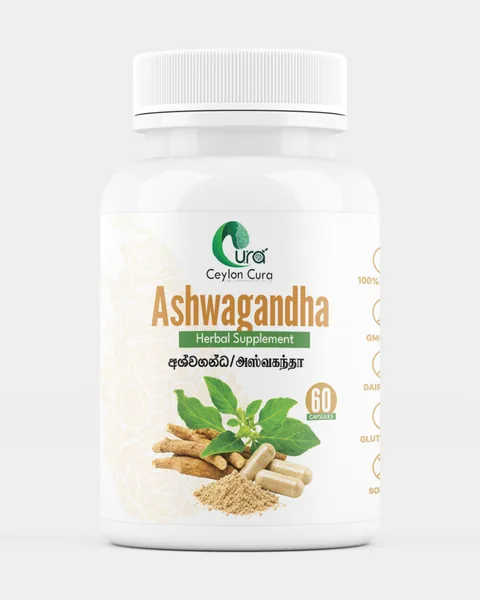
Ashwagandha

අශ්වගන්ධஅஸ்வகந்தா
Botanical name
Withania somnifera
Part used
Root

Classed in Ayurveda as a rasayana, a rejuvenating herb, ashwagandha is traditionally taken to help the body cope with everyday stress, to support restful sleep and to keep up stamina.

Ashwagandha has been part of Ayurvedic practice for more than three thousand years. The root is dried, milled and filled into capsules, so you get one ingredient and a measured amount every time, with none of the earthy taste of the raw powder.
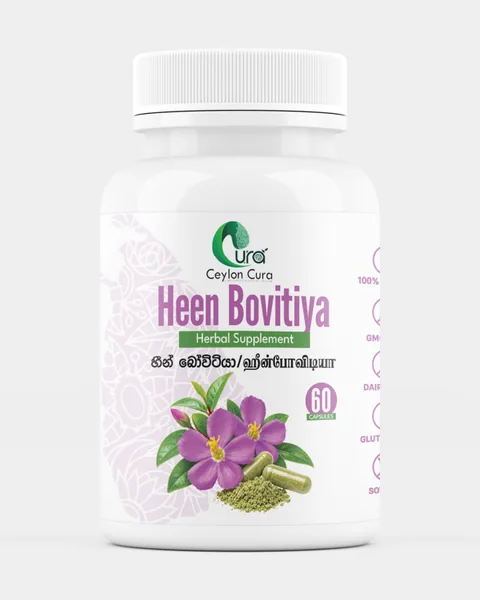
Heen Bovitiya

හීන් බෝවිටියාஹீன்போவிடியா
Botanical name
Osbeckia octandra
Part used
Leaf

In Sri Lanka's indigenous medicine, Deshiya Chikitsa, Heen Bovitiya leaves are traditionally prepared as a kola kenda or decoction to support liver health.

Heen Bovitiya grows wild in the wet zone of Sri Lanka and nowhere else. Its leaves are picked, shade-dried and ground before encapsulation, so the herb keeps its colour and character.

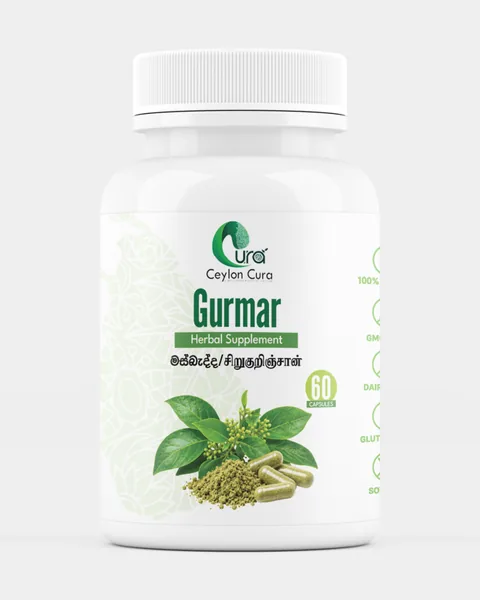
Gurmar

මස්බැද්දசிறுகுறிஞ்சான்
Botanical name
Gymnema sylvestre
Part used
Leaf

Gurmar has a long place in Ayurveda and Siddha practice, where it is traditionally taken to support healthy blood sugar as part of a balanced diet.

Gurmar, called Masbedda in Sinhala, is a woody climber of Sri Lanka's dry forests. Chew a fresh leaf and sweet foods briefly taste of nothing, which is how it earned its Hindi name. We dry and mill the leaf and fill it into capsules.

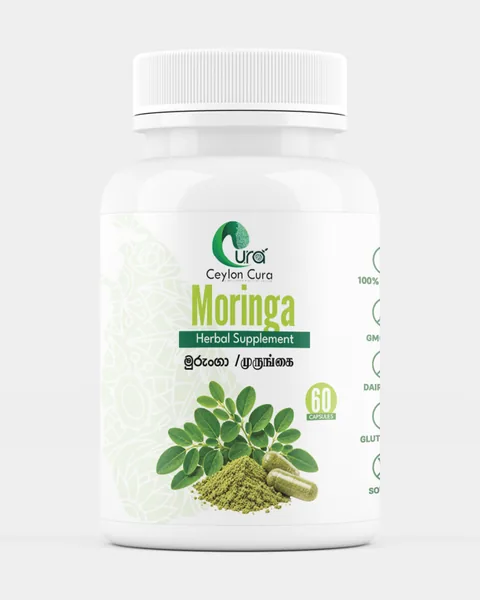
Moringa

මුරුංගාமுருங்கை
Botanical name
Moringa oleifera
Part used
Leaf

Murunga leaves are cooked as a mallum and added to curries across the island, and the plant is traditionally valued for everyday nourishment and resilience.

Almost every village garden in Sri Lanka has a murunga tree. The small leaves are naturally rich in vitamins, minerals and plant protein. We dry them at low heat to keep their colour, then mill and encapsulate them.

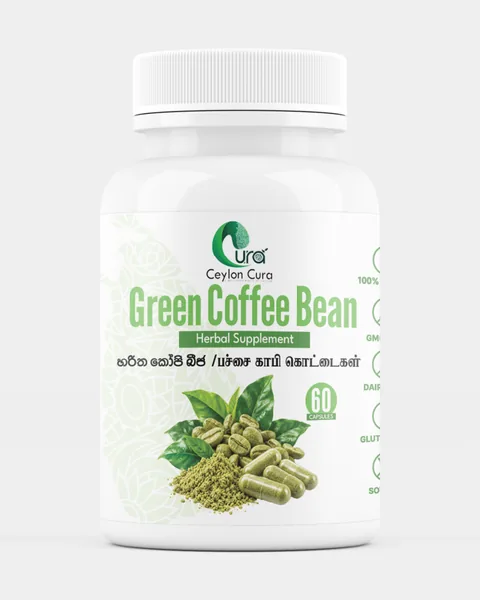
Green Coffee Bean

හරිත කෝපි බීජபச்சை காபி கொட்டைகள்
Botanical name
Coffea spp.
Part used
Unroasted bean

Green coffee has become a popular part of weight-management routines, taken alongside sensible eating and regular movement.

Roasting gives coffee its flavour but breaks down much of the chlorogenic acid in the bean. Green coffee is milled unroasted, then encapsulated. It contains some natural caffeine.

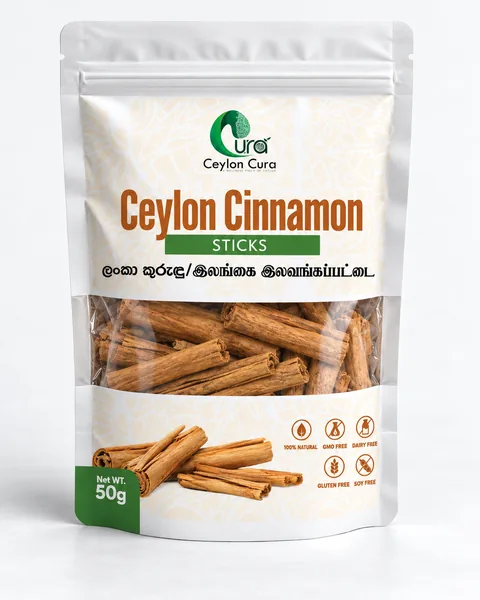
Ceylon Cinnamon

ලංකා කුරුඳුஇலங்கை இலவங்கப்பட்டை
Botanical name
Cinnamomum verum
Part used
Inner bark

Sri Lanka has traded cinnamon since antiquity. At home it goes into curries, milk rice and plain tea, and a stick simmered in water is a familiar household drink.

Most supermarket cinnamon is cassia. Ceylon cinnamon is a different tree: its bark is peeled by hand and rolled into soft, many-layered quills with a sweeter, more delicate taste and naturally far less coumarin.

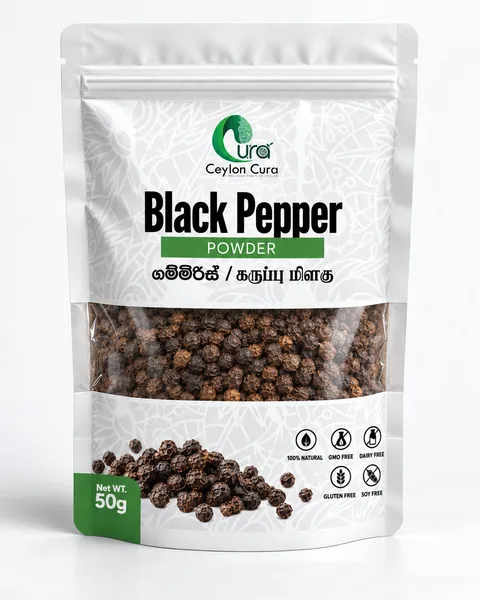
Black Pepper

ගම්මිරිස්கருப்பு மிளகு
Botanical name
Piper nigrum
Part used
Berry

Gammiris is a mainstay of Sri Lankan cooking and of traditional home remedies, and is often paired with turmeric.

Sri Lankan pepper is prized for its high piperine content, which gives it a clean, sharp heat. The berries are picked and sun-dried until they wrinkle and darken.

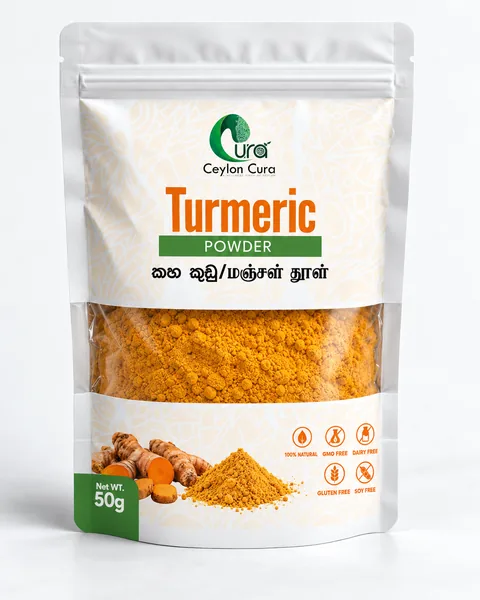
Turmeric

කහ කුඩුமஞ்சள் தூள்
Botanical name
Curcuma longa
Part used
Rhizome

Kaha goes into almost every Sri Lankan curry, and turmeric milk is a household standby when the weather turns.

Pure ground turmeric with no colouring, fillers or anti-caking agents. The colour comes from curcumin, the natural pigment in the root.

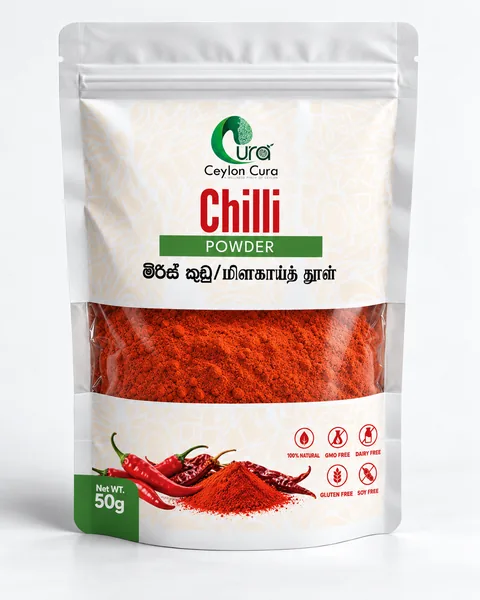
Chilli

මිරිස් කුඩුமிளகாய்த் தூள்
Botanical name
Capsicum annuum
Part used
Dried pod

Miris kudu is the backbone of Sri Lankan red curries, sambols and devilled dishes.

Whole dried chillies, ground without added colour or salt. Expect a medium-hot powder with a rounded, slightly smoky flavour.